Category: News

  • Sensex and Nifty Slide Sharply After Union Budget 2026: What Happened in the Stock Market

    Sensex and Nifty Slide Sharply After Union Budget 2026: What Happened in the Stock Market

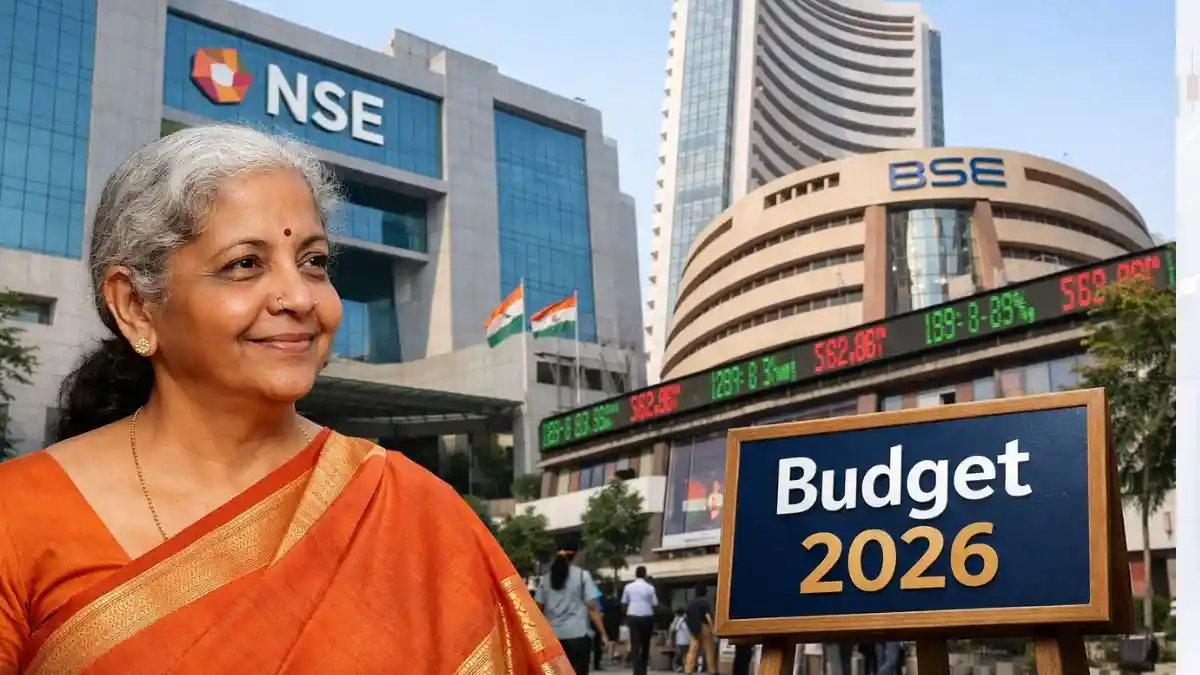
    India’s benchmark stock indices BSE Sensex and NSE Nifty 50 experienced a significant downturn on February 1, 2026, immediately after the Union Budget 2026–27 announcement by Finance Minister Nirmala Sitharaman. This marked one of the most negative market responses on a budget day in recent years, with major declines driven by investor concerns over key policy changes — especially tax increases on derivative trades.

    Strong Initial Optimism Fades Quickly

    When the Budget was unveiled during a special Sunday trading session, markets initially showed mixed sentiment. However, this optimism quickly faded as details of the Budget emerged, particularly the increase in the Securities Transaction Tax (STT) on equity derivatives such as futures and options. This move raised trading costs and spooked traders and institutional investors.

    Sensex and Nifty — Key Movements

    According to BusinessToday.in, the BSE Sensex plunged 1,546.84 points (about 1.88%) to close at approximately 80,722.94, while the Nifty 50 slid 495.20 points (around 1.96%) to finish near 24,825.45. These steep losses wiped out an estimated ₹10 lakh crore of market capitalization, signaling widespread selling pressure across sectors.

    NDTV also reported that at certain points during trading, the indices showed even larger drops, with the Nifty nearing a fall of nearly 3% as investors reassessed the cost of derivatives trading after the Budget’s announcements.

    Why Did Markets React So Negatively?

    The sharp sell-off in Sensex and Nifty was largely attributed to:

    1. Higher Taxes on Derivative Trades:

    The STT on futures was raised to 0.05% from 0.02%, and on options premiums to 0.15% from 0.10%; such increases directly affect traders and brokerage margins. Higher costs tend to reduce trading volumes, especially in the derivatives market, which had grown substantially in recent years. This unexpected change triggered quick selling, particularly among active traders and hedge funds.

    2. Lack of Immediate Market-Friendly Incentives:

    Investors were also disappointed by the absence of stronger fiscal incentives or measures for attracting foreign capital inflows — a point of concern given recent net outflows of foreign investment from Indian equities. This added to market unease.

    3. Broad Selling Across Sectors:

    Market breadth weakened significantly as most stocks ended in the red across various sectors, reflecting a widespread risk-off sentiment rather than sector-specific weakness.

    Market Analysts’ Views

    Analysts highlighted that the Budget’s shift toward higher transaction costs was meant to discourage speculative activity in derivatives, but the abrupt nature of this change caught traders off guard. Many pointed out that even marginal increases in tax rates can disproportionately affect derivative volumes and market sentiment.

    What It Means for Investors

    The sharp reaction of Sensex and Nifty suggests that markets are currently prioritizing liquidity considerations and tax environments over long-term Budget announcements like infrastructure spending or economic reforms. While the broader economic goals of the Budget remain relevant, the immediate impact shows that investors are sensitive to policy changes that affect trading costs and market participation dynamics.

  • Income Tax in Union Budget 2026: What Changed and What Stayed the Same

    Income Tax in Union Budget 2026: What Changed and What Stayed the Same

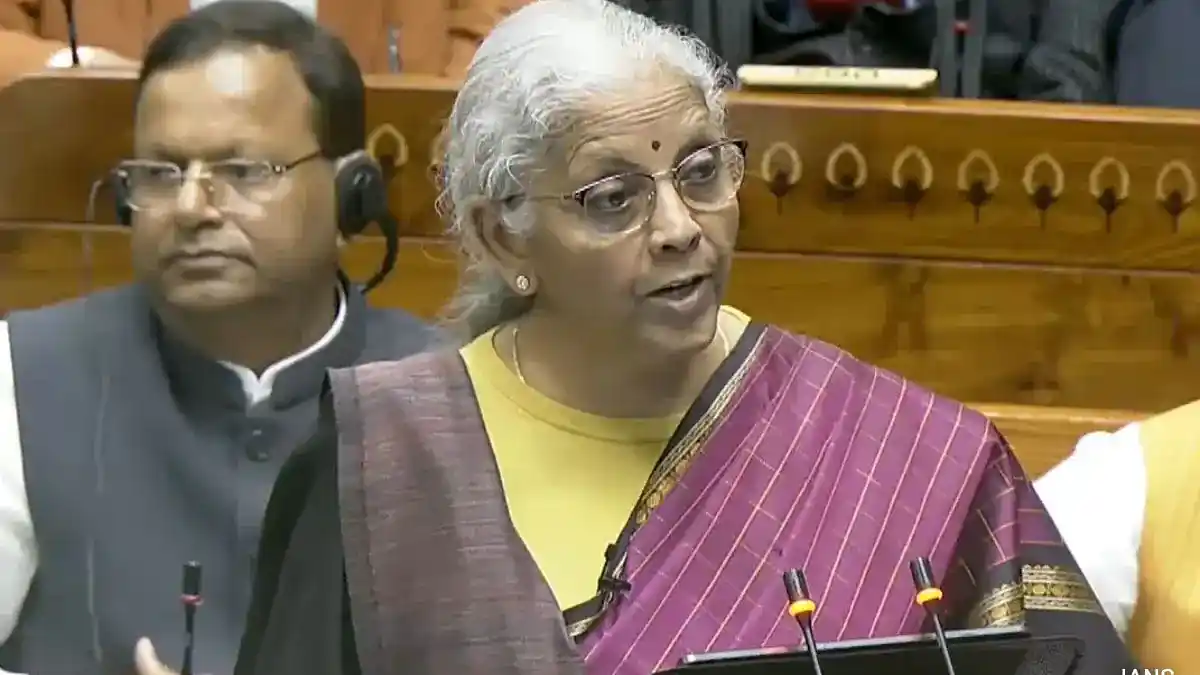
    Here’s a clear, up-to-date look at the income tax provisions announced in India’s Union Budget 2026–27 by Finance Minister Nirmala Sitharaman on February 1, 2026 — focusing on direct tax changes, compliance simplifications, and what taxpayers should know this year.

    1. No Change in Income Tax Slabs for Individuals

    Contrary to widespread expectations of tax cuts or slab revisions for salaried individuals and middle-class taxpayers, the 2026 Budget did not change the existing income tax rates or slab structure in either the old or new tax regime. The government chose to maintain stability in tax rates after last year’s major tax reform.

    Under the current new tax regime, the slab structure remains:

    • Income up to ₹4,00,000: Nil tax
    • ₹4,00,001 to ₹8,00,000: 5%
    • ₹8,00,001 to ₹12,00,000: 10%
    • ₹12,00,001 to ₹16,00,000: 15%
    • ₹16,00,001 to ₹20,00,000: 20%
    • ₹20,00,001 to ₹24,00,000: 25%
    • Above ₹24,00,000: 30%
      The existing tax exemptions and deductions (like standard deduction and rebate under Section 87A) also remain intact.

    This means for many salaried taxpayers, incomes up to around ₹12 lakh remain effectively tax-free under the new regime after standard deductions are applied — a carry-over benefit from the earlier tax overhaul.

    2. New Income Tax Act, 2025 Comes Into Force

    One of the biggest reforms announced in the Budget is the transition to the Income Tax Act, 2025, which will replace the old 1961 law starting April 1, 2026. This modernised statute simplifies the framework by cutting the number of provisions and sections nearly in half, making tax administration more transparent and user-friendly.

    Key features of the new Act include:

    • Simplified language and clearer tax provisions.
    • Fewer sections and rules, reducing ambiguity and legal disputes.
    • Replacing the “previous year-assessment year” model with a single tax year system — making tax filing and compliance easier.

    3. Easier Compliance and Extended Deadlines

    While tax rates stayed the same, the Budget introduced procedural changes aimed at reducing compliance burden:

    • Revised Income Tax Return (ITR) deadline extended to March 31 of the assessment year (up from December 31) — with a small nominal fee for late filings.
    • Staggered filing deadlines for different categories of taxpayers (e.g., ITR-1 and ITR-2 by July 31; non-audit businesses and trusts by August 31) are expected to reduce last-minute congestion.
    • A one-time six-month foreign asset disclosure window for taxpayers with small overseas assets to voluntarily report holdings with a specified tax and penalty regime has been introduced to clear up compliance issues.

    4. Targeted Tax Exemptions and Reliefs

    Although slabs didn’t change, the Budget provided some targeted tax relief measures:

    • Interest amounts awarded by the Motor Accident Claims Tribunal (MACT) to an individual will now be exempt from income tax, and there will be no TDS (Tax Deducted at Source) on such interest — ensuring full compensation for victims or families.
    • Higher thresholds for TCS (Tax Collected at Source) apply on overseas transactions such as foreign tour packages and education/medical remittances under Liberalised Remittance Scheme (LRS), making these transactions more cost-efficient for taxpayers.

    5. Compliance-Friendly Changes and Reduced Litigation

    The Budget also rationalises the prosecution framework under the Income Tax Act, shifting penalties away from criminal prosecution for minor defaults to fees, which is likely to reduce litigation and make the tax regime more “humane” and taxpayer-friendly.

    Overall Takeaway for Taxpayers in 2026

    Union Budget 2026 didn’t bring headline tax rate cuts but focused on stability, simplification, and ease of compliance. By introducing the new Income Tax Act from April 2026, extending return deadlines, and offering targeted exemptions, the government signalled a long-term shift toward a more straightforward and less contentious tax environment — while maintaining the broader tax structure introduced earlier.

  • Budget 2026 Explained: Why This Is the Most Confident and Assured Phase of Modinomics Yet

    Budget 2026 Explained: Why This Is the Most Confident and Assured Phase of Modinomics Yet

    On February 1, 2026, India’s Finance Minister Nirmala Sitharaman presented the Union Budget 2026-27, described by many analysts as the most assured phase of “Modinomics” yet — emphasizing infrastructure investment, manufacturing depth, technological transformation, and steady fiscal consolidation. This budget narrates a broader economic vision aimed at positioning India for long-term growth and global competitiveness.

    Capital Expenditure and Growth Strategy

    A centerpiece of the Budget is the record capital expenditure (capex) outlay of ₹12.2 lakh crore, reinforced as the engine of India’s economic strategy. This allocation underscores the government’s commitment to infrastructure — from logistics and transport corridors to industrial clusters — and aims to sustain economic expansion even amid global volatility.

    The fiscal math remains disciplined. The fiscal deficit is targeted at about 4.3 % of GDP for 2026-27, reflecting a continued path of consolidation while still enabling investment-led growth. GDP growth projections for the next fiscal year hover in the high 6 % to low 7 % range, indicating resilience in the face of global headwinds.

    Manufacturing, Critical Minerals, and Industrial Expansion

    The Budget carries forward a strategic push on manufacturing — moving beyond simple support toward deeper industry capabilities. New industrial clusters, revival of legacy sectors, and targeted missions for key industries are planned:

    Biopharma SHAKTI Mission with ₹10,000 crore to build India’s role in advanced therapeutics.
    Semiconductors and Electronics Components with a boosted outlay (as highlighted in other reports) aimed at reducing import dependence and enhancing domestic value chains.
    Rare-earth mineral corridors in multiple states to secure supply chains for high-tech manufacturing.

    These efforts signal a maturation of Modinomics from earlier phases — which focused on fiscal reform and pandemic recovery — toward deeper structural transformations, such as import substitution and global integration.

    Technology, AI, and Services Exports

    Technology features prominently in Budget planning. Several initiatives are designed to harness India’s digital strengths:

    • Expansion of AI-driven platforms like multilingual agricultural advisory systems.
    • Incentives for data centres and cloud infrastructure, positioning India as a credible digital hub.
    • A 10 % global services export target, recognizing India’s advantage in digital services and workforce skills.

    This shift reflects the government’s recognition that future growth will increasingly depend on technological adoption and integration across sectors.

    Social Sector, Jobs, and Human Capital

    While infrastructure and industry draw headlines, the Budget also allocates resources toward human capital:

    • Expanded healthcare spending via new hubs and partnerships under public-private frameworks.
    • Emphasis on education and employment ecosystems to equip India’s young workforce for emerging technologies.

    These investments aim to convert India’s demographic strength into productive capacity, addressing structural skills gaps and enabling long-term inclusivity.

    Taxation and Market Reforms

    The Budget does not focus on dramatic direct tax cuts, but rather on tax policy simplification and compliance ease. Extensions in timelines for filing and TDS/TCS rationalization reflect a move toward a maturing fiscal regime, designed to reduce friction for taxpayers and businesses.

    Market participants also reacted to certain tax changes — including hikes in securities transaction tax (STT) on futures and options — which caused short-term volatility in equity markets, illustrating the balancing act between revenue generation and investor sentiment.

    The Broader Modinomics Narrative

    Across its three phases, Modinomics has evolved:
    Phase 1 focused on fiscal repair and foundational reform.
    Phase 2 navigated pandemic recovery and ramped up investment through Production Linked Incentives (PLI) and capex growth.
    Phase 3, embodied by Budget 2026, aims to integrate investment, technology, global competitiveness, and structural transformation.

    This comprehensive approach — from infrastructure to innovation — is why many economists view the 2026 Budget as the most assured phase of Modinomics yet, setting a long-term roadmap for India’s advancement toward becoming a global economic powerhouse.